![CPT Rehab [logo]](https://www.cptrehab.com/wp-content/themes/cpt-rehab/images/logo.png)
Back to School: The ABCs of Physical, Occupational, and Speech Therapy
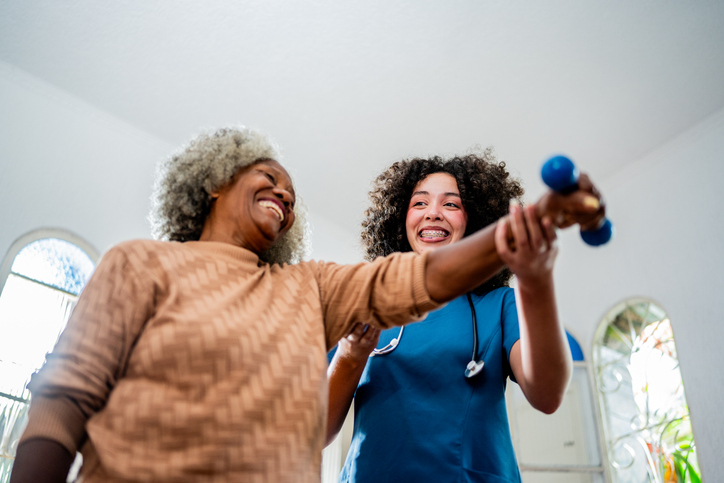
Every September, students everywhere get a fresh start. If you have been putting off therapy, or you are new and not sure what to expect, think of this as your first day of class. Here is everything you need to know about physical, occupational, and speech therapy.
A: Assessment
Every therapy journey starts with an assessment covering medical history, current symptoms, and how the body is functioning. This helps therapists build a personalized plan.
B: Balance and coordination
Balance is one of the most common reasons adults seek physical therapy.
C: Communication
When it takes longer to get words out or others frequently ask for repetition, a speech therapist can help.
D: Dysphagia
Dysphagia is the medical term for difficulty swallowing. It’s very common, especially after a stroke. A speech therapist can help.
E: Evaluation
Evaluation doesn’t just happen at the beginning or end of a therapy program. Therapists track progress throughout treatment and adjust the plan based on how each patient responds.
F: Fine motor skills
When buttoning a shirt, writing, or using utensils has become harder, occupational therapy can help rebuild or adapt those skills.
G: Goals
Every treatment plan is built around the patient’s specific goals, set collaboratively with the therapist at the start of treatment.
H: Home exercise program
A home exercise program is a tailored plan to help patients meet their goals. Sticking to a home exercise program is one of the biggest factors in recovery.
I: Independence
Independence is the central goal of occupational therapy, helping patients return to the daily tasks they had trouble completing on their own.
J: Joint health
Physical therapy helps improve mobility, reduce pain, and build the strength that keeps knees, hips, shoulders, and hands working well.
K: Keeping up with daily life
Across all three therapies, the goal is the same: helping people keep up with daily life on their own terms.
L: Language
Aphasia is a language disorder most often caused by stroke that affects the ability to speak, read, write, or understand others. Speech therapy is a key part of recovery.
M: Mobility
Physical therapy works on range of motion, walking patterns, strength, and endurance for patients whose ability to get around has become harder.
N: Neurological conditions
Conditions such as Parkinson’s disease and stroke often require PT, OT, and ST working together. At CPT, all three are available under one roof.
O: Occupational therapy
Occupational therapy helps people continue with activities of daily life when a health condition has made those activities harder.
P: Physical therapy
Physical therapy addresses movement, strength, pain, and mobility for patients recovering from surgery, managing chronic conditions, or trying to stay active as they age.
Q: Quality of life
Therapy is not just about recovering from something. It is about living fully and independently, increasing quality of life.
R: Rehabilitation
Rehabilitation is the process of restoring function after illness, injury, or surgery. Progress takes time, and a good team adjusts along the way.
S: Speech therapy
Speech therapy helps adults with conditions affecting communication and swallowing, including voice disorders, aphasia, dysphagia, and cognitive communication challenges.
T: Treatment plan
A treatment plan outlines goals, frequency of sessions, and what success looks like. It changes as the patient progresses.
U: Upper and lower extremities
Whether the issue is a shoulder injury, hand surgery, or a knee replacement, there is a structured approach to rebuilding strength and function in the arms, hands, legs, and feet.
V: Voice
When the voice has become hoarse, soft, or hard to project, a speech therapist can help identify the cause and work on restoring clarity and strength.
W: Wellness
Therapy is not only for recovery. CPT’s wellness program supports patients who want to maintain function and stay active after formal treatment ends.
X: X-rays and imaging
Bringing recent imaging to a first appointment helps the therapist tailor treatment to what is actually happening structurally in the body.
Y: Your team
Physical, occupational, and speech therapists all work together at CPT, collaborating across disciplines so each patient’s care is coordinated and moving in the same direction.
Z: ZZZs
Pain and limited mobility can interfere with sleep. As function improves through therapy, many patients find their sleep does too.
Therapy looks different for everyone, but the goal is always the same: helping people function better in their daily lives. CPT’s physical, occupational, and speech therapists work with adults across a wide range of conditions. Contact us today to schedule an evaluation.